
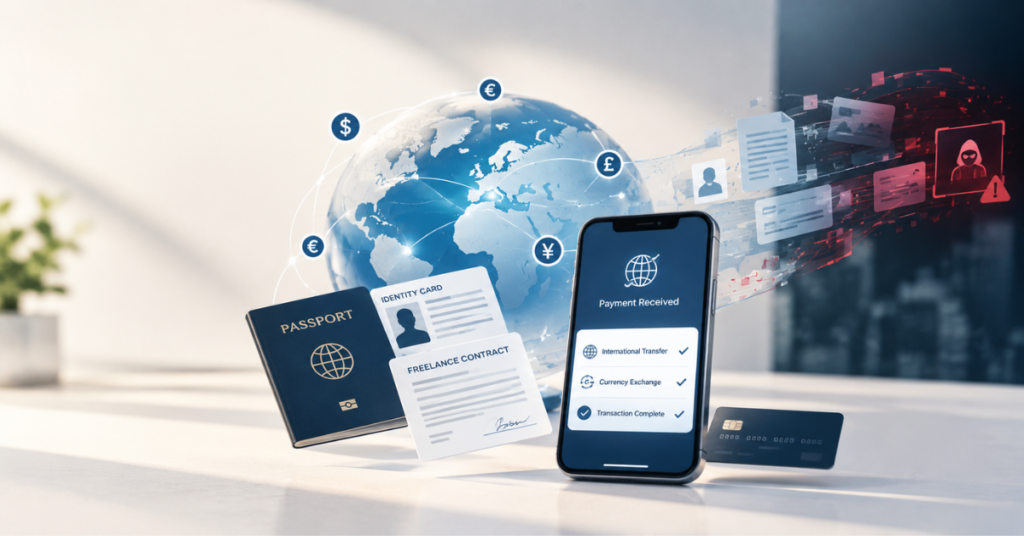
In February 2026, PayPal notified roughly 100 business account holders that their personal information, full name, email, phone number, business address, Social Security number, and date of birth, had been exposed for nearly six months.
The cause wasn’t a sophisticated external hack. An internal coding error in PayPal’s Working Capital loan feature made private files visible to unauthorized users, going undetected from July through December 2025 until someone at the company caught it. A small number of affected accounts saw actual unauthorized transactions before PayPal issued refunds.
The 2026 PayPal Working Capital incident reportedly affected roughly 100 customers, with unauthorized access from July 1 to December 12, 2025; PayPal reset passwords and refunded unauthorized transactions for affected accounts. (Digital Watchdog)
That case is worth sitting with because it illustrates what this article is about: payment-platform risk is genuinely different from the scam-based risks covered elsewhere in this cluster. Nobody phished these account holders.
Nobody tricked them into anything. The exposure happened entirely inside a system they trusted with their financial life, through a mistake they had no way to see coming or prevent. This article covers what that kind of risk actually looks like, and what, realistically, is and isn’t in your control.
Table of Contents
Platform Breach vs. Attack on Your Account: A Real Distinction
It’s worth separating these clearly, because they call for different responses and, more importantly, different amounts of self-blame.
| Reasons | Platform-Side Breach | Account-Level Attack (Phishing, Credential Stuffing) |
| What happened | The platform’s own systems or processes failed, exposing data regardless of what you did | Someone specifically targeted your login credentials, often reusing a password stolen elsewhere |
| Could you have prevented it? | No, this is entirely on the platform’s security practices | Partially, unique passwords and MFA meaningfully reduce this risk |
| Example | PayPal’s 2026 Working Capital data exposure | PayPal’s January 2023 incident, where roughly 35,000 accounts were accessed via credential stuffing using passwords leaked elsewhere |
| What to do about it | Monitor for the specific type of misuse the exposed data enables; there’s no prevention step you missed | Change the password everywhere it was reused, enable MFA going forward |
This is IdentityBastion’s practical distinction for payment-platform risk, not a formal classification, but a useful gut-check. If you get a breach notification citing an internal error or a systems compromise on the platform’s end, that’s not a moment to look for what you did wrong. There usually isn’t anything.
The Vectors Behind Payment Platform Risk
Internal platform errors, unrelated to any external attack. The PayPal Working Capital incident is the clearest recent example, a code change, not a breach in the traditional sense, exposed data for six months before internal detection caught it. This vector is unsettling because it doesn’t require anyone to have done anything wrong on the user side; the exposure depends entirely on how carefully the platform audits its own code changes.
Credential stuffing using passwords leaked elsewhere. PayPal’s January 2023 incident, which affected around 35,000 accounts, worked by testing username-and-password combinations already leaked in unrelated breaches against PayPal login pages, meaning affected users likely reused a password from another site. This is the one vector on this list where password hygiene directly closes the gap, since a unique password can’t be “stuffed” from a breach that never contained it.
Merchant and integration-side vulnerabilities, not the core platform itself. Payment-platform risk can also extend to the merchant or integration layer. For example, Stripe has documented attacks in which fraudsters use stolen payment-card data to test whether cards are active, showing that payment security isn’t limited to the processor’s core infrastructure (Stripe).
For a freelancer running their own invoicing site or storefront connected to a payment processor, this shifts some responsibility to how securely you maintain your site or integration, not just the payment processor’s core systems.
Regulatory and compliance gaps that predate a specific incident. PayPal also paid a $2 million New York Department of Financial Services settlement in January 2025 after a regulatory investigation found that changes to its Form 1099-K data collection flows left sensitive customer information unmasked and accessible to cybercriminals through credential stuffing. The case also identified failures in PayPal’s application-development and risk-control processes (DFS).
Linked bank accounts extend the blast radius. Once your bank account is linked to a payment platform for payouts, a platform-side breach that exposes account-linking details can cascade beyond the platform itself, which is part of why minimizing how many platforms have your direct bank details linked at once is worth doing, even though it adds a small amount of friction to getting paid quickly.
Why a Platform’s SSN + DOB Exposure Is Especially Serious
Per the IdentityBastion Exposure Framework, the specific combination exposed in the 2026 PayPal incident, full name, SSN, and date of birth together, sits squarely in Tier 1. Unlike a password, your Social Security number and date of birth aren’t credentials you can replace after exposure. That makes the long-term implications of an exposure different from a compromised password.
What Actually Helps, and What It Doesn’t
| Protection | Solves | Doesn’t Solve |
| Unique password per payment platform | Prevents credential-stuffing attacks that rely on password reuse | Does nothing for an internal platform error like the 2026 PayPal incident |
| Enabling MFA on every payment platform | Blocks most account takeover attempts even if a password is compromised | Doesn’t prevent a platform-side data exposure that happens independent of any login |
| Enabling transaction and login alerts (often available but not default-on) | Shortens the time between unauthorized activity and your awareness | Doesn’t prevent the activity itself |
| Minimizing how many platforms have your bank account directly linked | Limits how far a single platform breach can cascade | Doesn’t protect the platforms you do need to link for payouts |
| Reading breach notifications carefully rather than dismissing them as spam | Ensures you actually act on real, specific guidance when it applies to you | Doesn’t undo exposure that already happened before the notification arrived |
None of these prevent a platform-side error, that risk genuinely isn’t yours to control. What they do is limit how much damage compounds on top of it, and how quickly you notice if something does.
Common Mistakes With Payment Platform Security
Treating a breach notification email as spam or phishing without verifying it. Legitimate breach notifications can look similar to phishing attempts, which leads some people to delete them without checking; verify through the platform’s official site or support line rather than ignoring it outright.
Reusing the same password across multiple payment platforms is the exact mechanism that turned PayPal’s 2023 credential-stuffing incident into a real problem for affected accounts, rather than a blocked login attempt.
Never enabling optional security features that aren’t on by default. Many platforms offer login alerts, transaction notifications, and additional verification steps that require you to turn them on actively, features that exist specifically to shorten detection time, sitting unused simply because setup isn’t automatic.
Linking a personal bank account instead of a dedicated business one for payouts, which compounds the impact of any platform-side issue by connecting it directly to your personal finances rather than an account used only for business activity.
FAQs: Identity Theft and Freelance Payment Platforms
Are Payment Platforms Like PayPal, Payoneer, and Stripe Actually Safe for Freelancers?
Generally yes, and they remain far safer than informal payment methods like gift cards or unregulated transfer apps, but “safe” doesn’t mean risk-free, as the 2026 PayPal Working Capital incident demonstrates. The risk isn’t a reason to avoid these platforms; it’s a reason to add your own protections.
What Should I Do if I Get a Data Breach Notification From a Payment Platform I Use?
Verify it’s legitimate through the platform’s own official site, then follow the specific guidance given, often changing your password, monitoring for the specific type of misuse the exposed data enables, and enabling MFA if you haven’t already.
Can I Prevent a Platform-Side Data Breach Myself?
No, not directly, that risk lives entirely with the platform’s own security and auditing practices. What you can control is limiting the damage a breach causes and being able to notice quickly if something goes wrong.
Is It My Fault if a Payment Platform Is Breached and My Information Is Exposed?
No. A platform-side breach or internal error, like the 2026 PayPal incident, isn’t something a typical user could have prevented through better personal security habits, that distinction matters, since not every identity theft risk in freelance work traces back to something you did.
Should I Use Fewer Payment Platforms to Reduce Risk?
It can help, since each additional platform with your bank details linked adds another potential point of exposure, but weigh that against the practical need to work across the platforms your clients actually use.
Bottom Line: Identity Theft and Freelance Payment Platforms
Payment platform risk splits into two genuinely different categories: what happens when someone attacks your specific account, and what happens when the platform itself fails you through no fault of your own. The first category responds well to the basics, unique passwords, MFA, and enabled alerts. The second doesn’t respond to anything you personally do differently, which is worth internalizing so a breach notification doesn’t turn into unwarranted self-blame.
What you can actually control: limiting how many platforms hold your linked bank details, turning on every optional security alert available, and treating breach notifications as real information to act on rather than noise to ignore.
What to Do Next
Payment platform risk is what happens after a relationship is already underway. Still, a lot of exposure actually starts earlier, during the initial back-and-forth of getting hired. Our guide covers exactly how that stage gets exploited.
Pingback: How Freelancers Get Identity Theft (Real Attack Patterns)
Pingback: Identity Theft Risks When Working With Overseas Clients
Pingback: Digital Identity Theft Protection for Freelancers: A Guide