
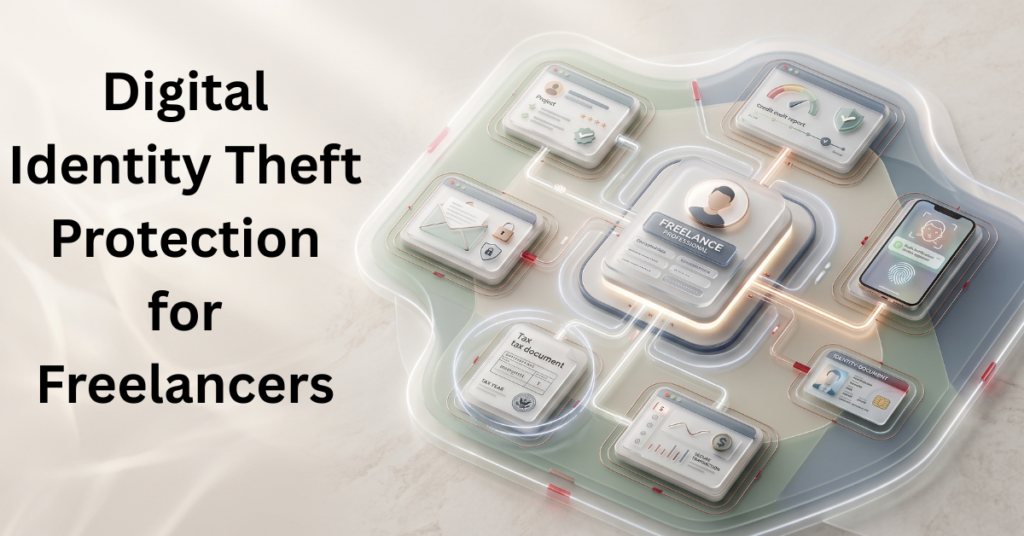
In a 2024 TransUnion survey, more than a third of gig platform users said they’d already been the victim of fraud or a scam while using a freelance or gig app, up from about a quarter the year before (TransUnion). The FBI’s 2025 Internet Crime Report created a new category for AI-related fraud, accounting for 22,364 complaints and costing Americans nearly $893 million in losses to scams increasingly built around cloned voices and fabricated video (FBI).
Government oversight officials also identified $5.4 billion in potentially fraudulent pandemic-era PPP and COVID-19 EIDL loans linked to more than 69,000 questionable Social Security numbers. The findings illustrate the scale of identity-related fraud in emergency lending programs. Still, they do not establish that self-employed applicants were uniquely responsible for or disproportionately exposed to it (oversight).
None of these numbers describes freelancing as uniquely dangerous. They describe something more specific: freelance work creates a different shape of exposure than traditional employment does. You don’t have one employer holding your SSN and one IT department screening what you share, you have a rotating set of clients, platforms, and payment processors, each one a new relationship where something could go wrong, multiplied across every project you take on.
That’s the actual premise behind this guide, and behind the eighteen deep-dive articles it draws together: freelance identity protection isn’t about being more paranoid than everyone else. It’s about understanding how your exposure differs from a salaried employee’s and building habits that match it.
This guide walks through that exposure stage by stage, before you take on clients, during onboarding, through ongoing work, at tax time, and in your everyday protective habits, pulling together the most important finding from each dedicated piece along the way, so you have a complete picture in one place and a clear path to the full depth wherever you need it.
Table of Contents
The Framework That Ties Everything Together
Before walking through the stages, it’s worth introducing the lens we use throughout this entire series, since it’s the thing that actually helps you prioritize rather than treating every piece of advice as equally urgent.
The IdentityBastion Exposure Framework groups your personal information into three tiers based on how directly a thief can act on it and how fast the resulting damage tends to show up. This is an IdentityBastion editorial framework, not an official government or industry classification, but it’s the organizing idea behind nearly everything in this guide.
- Tier 1, Direct Identifier: Your SSN, EIN, full date of birth, driver’s license, or passport. Exposure here tends to surface slowly but causes the most lasting damage, new-account fraud, tax fraud, business loan fraud.
- Tier 2, Account Credentials: Your email and platform passwords, especially if reused. Exposure here moves fast, but is also the easiest to close off with unique passwords and MFA.
- Tier 3, Contextual Data: Your name, address, phone number, and public portfolio details. Low value in isolation, but it amplifies the other two tiers by making phishing and social engineering more convincing.
Nearly every mistake covered across this guide comes down to mismatching a fix to the wrong tier, changing a password when the real problem is an exposed SSN, or freezing your credit when the real problem is a compromised email account. Keep this framework in mind as you move through each stage below.
Stage 1: Before You Take On Clients
The foundational decisions you make before your first project shape how much exposure every subsequent client relationship creates.
Decide early whether to use your SSN or an EIN. Getting an EIN is free, takes about ten minutes through IRS.gov, and significantly reduces how often your Social Security number circulates among clients. It’s worth knowing precisely what it does. It doesn’t change your SSN, it still appears on the EIN application as the “responsible party,” and business credit files aren’t covered by the same federally mandated freeze your personal credit enjoys.[SSN vs EIN Risks for Freelancers]
Lock down your platform settings before you need them, not after something goes wrong. That means securing the email tied to your freelance accounts first (since it’s usually the account-recovery path that can override platform-level security), then enabling two-factor authentication directly on the platform, reviewing your profile visibility settings, and checking which third-party apps have access to your account. [How to Protect Identity on Freelance Marketplaces]
Build the habits before volume makes them harder to retrofit. A password manager, unique credentials per platform, and app-based MFA are dramatically easier to set up with three accounts than with thirty. The research is sobering: surveys consistently show that most people reuse passwords across multiple sites despite knowing the risk. This isn’t usually ignorance, it’s friction, and it’s worth removing that friction before your account list grows. [Identity Theft Protection Mistakes Freelancers Make]
Stage 2: Client Onboarding, The Highest-Risk Window
Every other stage of freelance work happens within an at-least-partially verified relationship. Onboarding is different: you don’t yet know if the client or recruiter is real, and you’re often motivated to move quickly because a new project is attractive.
A real, ongoing campaign, tracked since late 2023 by multiple independent security researchers, specifically targets this exact moment. Known as Contagious Interview, it poses as recruiters on job and freelance platforms and sends a “coding test” that’s actually a vehicle for credential-stealing malware (Microsoft). The specific defence: never run unfamiliar test code outside a sandboxed environment, and treat pressure to skip that precaution as a red flag in itself. [How Identity Theft Happens During Client Onboarding]
W-9 requests are normal, the timing and delivery method are what matter. A completed W-9 typically includes your SSN or EIN in a single document, making it a Tier 1 exposure point by default. The difference between a legitimate request and a red flag usually comes down to whether it arrives before or after an actual agreement is in place, and whether you’re asked to send it through a secure channel or a plain email attachment. [Identity Theft Risks of Sharing W9 Forms]
Overseas clients introduce risks that don’t exist domestically. The clearest rule worth internalizing: your payment platform may legitimately need your passport or ID for compliance reasons, but your client never does, a client personally requesting that document directly is a red flag regardless of how legitimate the relationship otherwise seems. [Identity Theft Risks When Working With Overseas Clients]
Not every bad onboarding experience is identity theft. A fake client scamming you out of unpaid work is fraud; it becomes identity theft only when your SSN, EIN, or other identifying information changes hands. This distinction matters because it determines which recovery process actually applies. [Identity Theft vs. Fraud Explained for Freelancers]
Stage 3: Ongoing Work and Payment Infrastructure
Once a relationship is underway, the risk shifts from “is this person real” to “how well is the infrastructure around this relationship actually secured.”
Payment platforms carry risks that are genuinely outside your control. In February 2026, a PayPal data exposure affecting business accounts was discovered in December after faulty code exposed data for nearly six months, including SSNs and dates of birth, not through any mistake the account holders made, but through an internal platform error. The practical response isn’t guilt; it’s knowing the difference between a platform-side failure and an account-level attack like credential stuffing (where unique passwords and MFA genuinely help). [Identity Theft and Freelance Payment Platforms]
Contractor arrangements through Employer-of-Record platforms concentrate your data differently than one-off freelance gigs. Contractor-management and Employer-of-Record platforms may collect identity, tax, payment, and employment-related information in one place. Before joining, review the platform’s privacy notice and ask how long it retains your data after an engagement ends. [Identity Theft Risks for Remote Contractors]
Stage 4: Recognizing When Something’s Actually Wrong
Generic warning-sign advice is written for salaried employees and misses the signals that show up earliest in freelance work specifically.
Freelancer-specific warning signs often look like paperwork, not security alerts. A fake 1099 for work you never did, a client mentioning a message you never sent, or a payout landing somewhere other than your actual account are all signals that don’t appear on any general consumer warning-sign checklist. [Freelancer Identity Theft Warning Signs]
Some of the most common freelancer beliefs about identity theft are wrong, in both directions. “I’m too small to be a target” underestimates risk; “any suspicious message means my identity is already stolen” overreacts to it. Both lead to the wrong response.
Worth knowing too: one of the most frequently cited small-business cybersecurity statistics, that 60% of small businesses close within six months of a cyberattack, has been formally disavowed by the organization most often credited with it, which is a useful reminder to verify the numbers behind any urgent-sounding claim, including ones made by well-meaning security content. [Identity Theft Myths Freelancers Believe]
Stage 5: Tax Season, A Structurally Different Risk Profile
Self-employment doesn’t just add more places tax fraud could happen, it structurally multiplies your exposure in ways that have nothing to do with anything you did wrong.
The causes are mechanical. More clients may mean more organizations receive your tax information, but that doesn’t automatically mean a higher risk of identity theft. And during pandemic-era relief programs, the self-employed application path required lighter verification than employer-based programs, which is the specific mechanism behind billions of dollars in documented SSN-based loan fraud. [Tax Identity Theft Risks for Self-Employed]
The effects go well past a delayed refund. The National Taxpayer Advocate’s 2026 report found tax identity theft cases now take an average of roughly 21 months to resolve, against the IRS’s own stated goal of 120 days. For a freelancer, that delay can mean you can’t produce the income documentation a mortgage lender requires, sometimes for well over a year. [Can Identity Theft Affect Freelance Taxes]
The recovery process has a routing decision most people get wrong. If the IRS already sent you a specific identity verification letter, respond to that letter, filing Form 14039 on top of it creates a duplicate that adds time without changing the outcome. If you discovered the problem yourself with no letter, filing the affidavit (or Form 14039-B for EIN-based business fraud) is what actually starts the case. [Working With the IRS After Tax Identity Theft]
Stage 6: Everyday Protective Habits
The ongoing layer that sits underneath everything above, not a one-time setup, but a maintained practice.
A credit freeze is free, effective, and specifically aimed at new-account fraud. It’s also worth knowing precisely what it doesn’t cover: it won’t stop tax fraud, existing-account fraud, or the kind of loosely-verified loan program fraud discussed above, and it doesn’t extend to business credit tied to an EIN, which isn’t protected by the same federal mandate. [How to Freeze Credit as a Freelancer]
You don’t need a paid subscription to monitor your credit thoroughly. Combining AnnualCreditReport.com’s free weekly reports, Credit Karma’s two-bureau tracking, and Experian’s genuinely free FICO score tier gets you close to comprehensive coverage at no cost. However, credit monitoring alone won’t catch tax fraud, medical fraud, or dark web exposure, since none of those shows up on a credit report. [How to Monitor Credit Without Paid Tools]
How often you check matters less than matching your cadence to how different fraud types actually behave. Research on new-account fraud specifically shows a meaningful share of cases go undetected for months, sometimes longer, which argues for a baseline schedule layered with checks triggered by specific high-exposure events, like sharing an SSN with a new client or getting a breach notification, rather than either a rigid calendar or a purely reactive approach. [How Often Freelancers Should Monitor Credit]
The Quick-Reference Priority List
If you only act on five things from this entire guide, make them these, ordered by how much protection they add relative to the effort required.
- Secure your email first with a unique password and app-based MFA; it’s the recovery path behind nearly every other account on this list and the single most leveraged fix available.
- Get an EIN if you haven’t already, and update your paperwork with existing clients, not just new ones.
- Freeze your credit at all three bureaus. A freeze is free and can help prevent new-credit accounts from being opened in your name, although it doesn’t stop every form of identity fraud (CFPB).
- Enable MFA on every payment platform and freelance marketplace account, prioritizing app-based authentication over SMS.
- Verify new clients independently before sharing anything sensitive, a five-minute check costs less than any of the recovery processes covered across this guide.
What a Paid Protection Service Actually Adds
Everything covered in this guide is free. It’s worth being honest about what a paid identity theft protection service adds beyond what you can do yourself: monitoring for certain personal information, alerts, recovery assistance, and insurance for eligible expenses. Features, exclusions, and coverage limits vary by plan. These services complement preventive steps such as MFA and credit freezes; they do not guarantee they will prevent identity theft.
None of that replaces the free fundamentals above, a paid service detects and assists, it doesn’t prevent identity theft from happening in the first place, and the free protections in this guide remain the actual first line of defence regardless of whether you add a paid layer on top. [How Identity Theft Protection Services Actually Work]
The Pattern Underneath Everything in This Guide
Looking across all eighteen deep-dive topics this guide draws from, a few threads repeat often enough to call out directly.
Verification before sharing is a recurring defence. Whether you’re working with a new client, handling a W-9 request, running an overseas identity check, or running a coding test, verifying the requester and understanding why you need information or access can reduce avoidable exposure.
Friction, not ignorance, explains most of the gaps. Most freelancers already know password reuse is risky, and that MFA helps, mistakes happen because safe behavior takes a few extra minutes, while unsafe behavior doesn’t, until the day it matters.
Email security underlies almost every other protection on this list. It’s the recovery path for your platform accounts, the delivery channel for sensitive documents, and often the first domino in an account-takeover chain, which is why it belongs at the top of every priority list in this guide, not buried in the middle.
FAQs: Digital Identity Theft Protection for Freelancers
What’s the Single Biggest Identity Theft Risk Freelancers Face?
There isn’t one universally established biggest risk for freelancers. Fake recruitment schemes, compromised accounts, fraudulent document requests, and data breaches are different routes to identity misuse. The most relevant risk depends on your work, the information you share, and the accounts you use.
Is Freelancing Actually Riskier Than Traditional Employment for Identity Theft?
Not inherently riskier, but structurally different, freelancers share personal and financial information with far more parties, far more often, than a salaried employee typically does, creating more individual points where something could go wrong.
Do I Need to Read All Eighteen Linked Guides, or Is This Enough?
This guide covers the core finding from each one, which is enough for a solid general foundation. The linked guides go into the specific mechanics, step-by-step processes, and current data behind each topic, worth reading in full for whichever stage is most relevant to your current situation.
How Much of This Actually Costs Money?
Almost none of it. A credit freeze, an EIN, MFA, a password manager’s free tier, and free credit monitoring tools cover the large majority of meaningful protection, paid services add convenience and additional monitoring layers, not fundamentally different protection.
Where Should I Start if I’m Getting Into Freelancing?
Begin with Stage 1 above: decide on an EIN, lock down your platform and email security, and set up a password manager before you take on your first few clients. it’s considerably easier to build these habits early than to retrofit them once your account list has grown.
Conclusion: Protect Your Digital Identity Before Something Goes Wrong
As a freelancer, your digital identity is connected to more than your personal information. It links your professional profiles, client relationships, email accounts, tax records, payment platforms, and financial history. If one of these areas is compromised, the consequences can extend beyond a single account.
You cannot eliminate every identity theft risk, and no single tool can protect you from every type of misuse. What you can do is make your information harder to obtain, your accounts harder to compromise, and suspicious activity easier to detect.
Start with the fundamentals: use unique passwords and multifactor authentication, verify clients before sharing sensitive documents, review the permissions and security settings of your freelance accounts, and monitor your consumer credit and relevant tax records. Consider a credit freeze if you want to restrict access to your credit reports for new-credit applications. If you discover suspicious activity, act promptly and use the appropriate official reporting and recovery channels.
Paid identity theft protection services may provide additional monitoring or recovery assistance, but their features and limitations vary. Understand what a service actually covers before paying for it, and don’t assume that monitoring alone will prevent identity theft.
The goal isn’t to make yourself impossible to target. It’s to reduce unnecessary exposure, recognize warning signs early, and know what to do if your information is misused. Build these habits into your regular freelance workflow, and protecting your identity becomes part of running a more secure business, not something you think about only after a problem occurs.
What to Do Next
If you’ve worked through the free fundamentals in this guide and you’re weighing whether additional monitoring or restoration support makes sense for your specific situation, our breakdown of how paid protection services actually work covers exactly what you’d be paying for, and what you wouldn’t need to.